Projects that already run
The four most recent projects from our team: real systems in agriculture, water, and the marine environment that combine satellite data, field sensors, and artificial intelligence. They are the proof of the method we apply to your operation.
PRIMA · FEADER · Biodiversity Foundation · operational groups
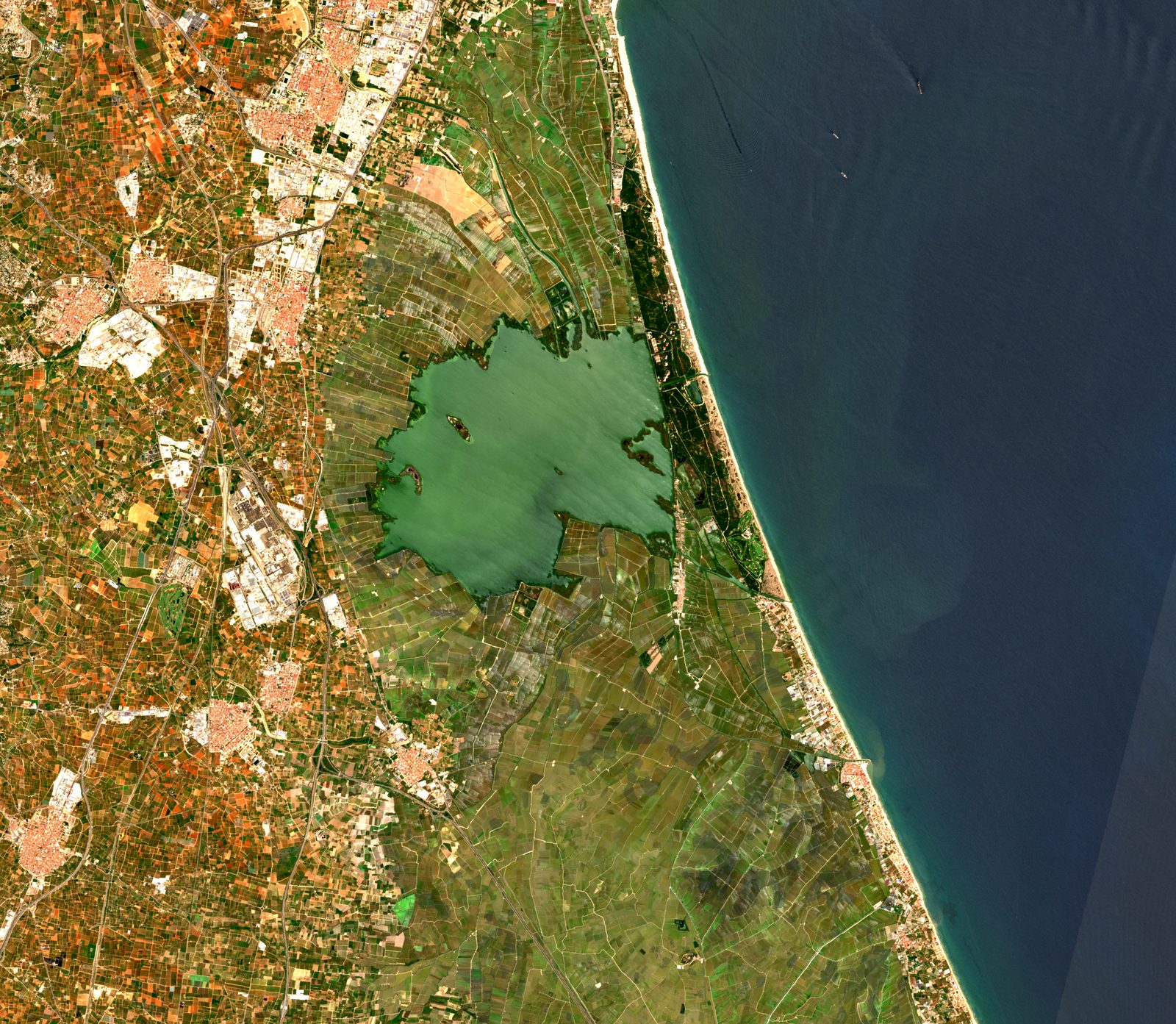
Sentinel-2 L2A · 29-05-2026 · l'Albufera (Valencia, Spain) · true color · Contains modified Copernicus Sentinel data [2026] · processed by T3 AISAT
The team that designed and built these systems is the same team that forms T3 AISAT today. These four projects are the most recent in a longer track record within European and national R&D programs, and each one leaves a transferable capability you can bring to your own operation.
TELENITRO
Real-time nitrogen management DSS for Mediterranean horticulture, guided by satellite and sensors (PRIMA program).
LINOMAR
DSS for crops and microalgae production for biostimulants, with satellite data and field probes (FEADER; Mar Menor and La Albufera).
Olive Carbon Balance
Remote sensing studies and a carbon balance DSS for olive groves, in a multi-region operational group.
MICROMAR
DSS and satellite monitoring of horticultural crops with biostimulants (Biodiversity Foundation).
App T3 AISAT
Our own mobile app for precision agriculture with satellite data, built entirely by the team. Available on Google Play and the App Store.
A common thread
All four share the same pattern: read the state of a crop, a body of water, or a territory from the satellite, calibrate it with field sensors, and turn it into a recommendation someone can act on. The problem changes (nitrogen, nitrates, carbon, biostimulants) and the method stays the same. That transferable capability is exactly what we bring to a new operation.
Each card links to the capability that the project leaves proven, so you can see how it carries over to your case. And all of them share one origin: they were designed and built by the same team, within competitive R&D programs with public funding and external review.
The open base, in numbers
The four projects share one more thing: they stand on Copernicus open data, the same public base you can use too. The global community building on it grows at this pace.
Want a system like this in your operation?
These projects started with one concrete operational question. Tell us yours and we will tell you which data answers it and how we turn it into a system.
Talk to the team